Franklin Dumpster Permit Guide: What the City Actually Requires
Franklin's dumpster permit rules are real and specific — but they only apply inside city limits. Here's the honest, town-by-town breakdown for the whole service area.
Franklin dumpster guide
Most household and construction debris is fair game, but Tennessee law draws real lines around a few categories — and clears up a common myth about electronics. Here's the full breakdown.
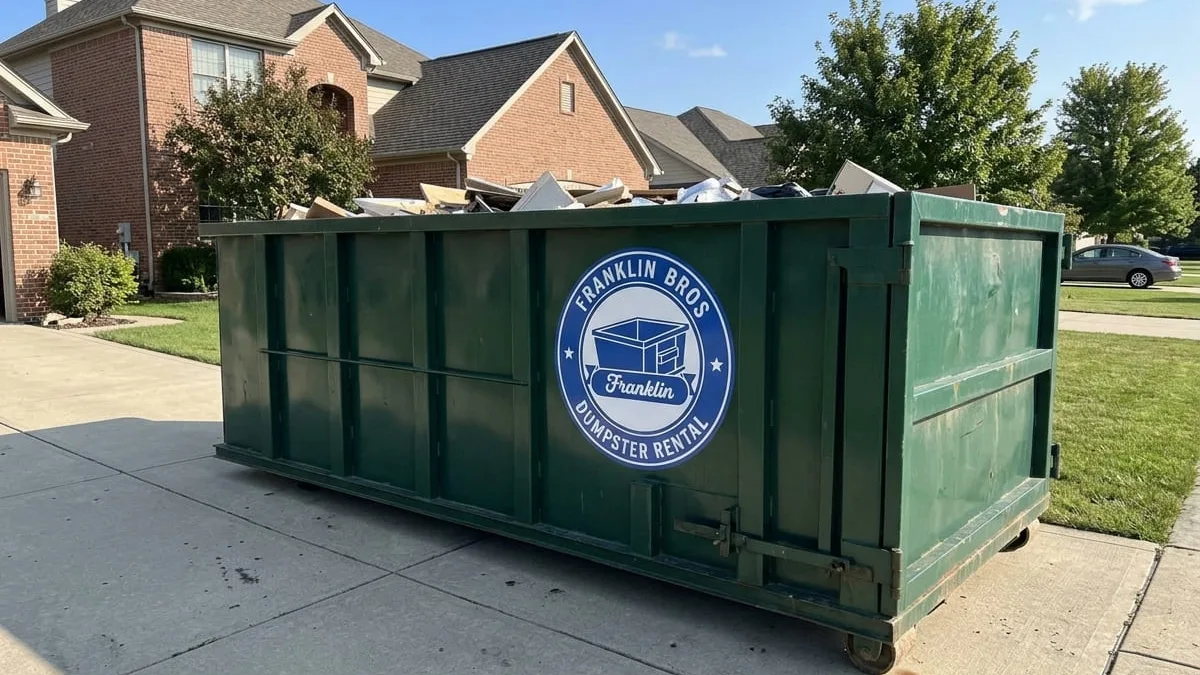
A roll-off dumpster is built to handle the bulk of what a renovation, cleanout, or construction project produces, and for the overwhelming majority of projects across Franklin and Middle Tennessee, that's exactly how it works — load it up and we haul it away. A handful of material categories are restricted or banned outright, though, some by Tennessee state law and some simply because they're unsafe to mix in with a general debris load. This guide covers what's generally fine, what's excluded and why, and where the genuinely restricted items need to go instead.
The large majority of what goes into a residential or job-site dumpster is unrestricted: general household junk, furniture, boxes, clothing and linens, carpet and padding, clean wood and lumber scraps, drywall, flooring, cabinetry, roofing shingles and tear-off, and non-hazardous construction and demolition debris. This is the material stream a standard residential dumpster rental or construction dumpster rental is built around, and it's what makes up nearly every load we haul. If you're clearing out a garage, tearing off a roof, gutting a kitchen, or hauling framing scrap off a new build, all of that is squarely in bounds.
Tennessee state law — specifically TCA §68-211-866, part of the Solid Waste Management Act of 1991 — bars a specific short list of materials from landfills and incinerators statewide: whole waste tires, lead-acid batteries, and used oil. These aren't optional exclusions or a courtesy we ask for; they're barred by law from the landfill disposal stream a dumpster ultimately feeds into. Whole tires have to go to a tire retailer or a dedicated tire-recycling drop-off instead. Lead-acid batteries — car batteries, most notably — are almost always accepted back by auto parts stores and battery retailers, often for a small core credit. Used motor oil needs a dedicated recycling drop-off, which most auto parts stores and service centers also provide. If your project involves clearing out a garage or shop with any of these on hand, set them aside for their own disposal path rather than tossing them in with everything else.
This one is worth being precise about, because some other states do ban electronics from landfills outright, and it's a genuinely common misconception that Tennessee works the same way. It doesn't. Tennessee has no blanket statewide law banning electronics — TVs, computers, monitors, printers, and similar devices — from the regular waste stream. That means, strictly speaking, old electronics aren't automatically prohibited from a dumpster load the way they would be in a state with an e-waste landfill ban on the books.
That said, “not legally banned” isn't the same as “the best option.” Electronics contain metals, circuit boards, and components that are genuinely better recovered through proper recycling than sent to a landfill, and a certified electronics recycler is the better route whenever it's practical — particularly for larger quantities, like an office cleanout or a full estate full of old equipment. Williamson County runs eWaste recycling drop-off options through its convenience center system, and that's a straightforward path for anyone who'd rather recycle electronics than have them ride along in a general debris load. The Tennessee Department of Environment and Conservation (TDEC) is the state agency that oversees solid waste and recycling policy statewide, and its guidance leans the same direction — recycle electronics when you can, even without a blanket law forcing the issue.
Beyond the specific state-law items above, a standard dumpster can't take paint, fuel, motor oil beyond what's covered by the used-oil rule, solvents, and other chemicals — not because of one specific statute, but because these materials are broadly treated as hazardous waste and simply aren't safe to mix into a general debris load or send to a standard landfill. Propane tanks and other pressurized cylinders, pesticides and herbicides, and any material classified as hazardous waste fall into the same category. Most of these have a dedicated disposal path — a household hazardous waste collection event, an auto parts store that takes oil and batteries, or a licensed hazardous waste hauler for larger commercial quantities. If you're not sure whether something in the pile counts, ask us before it goes in the box.
Medical or biohazard waste of any kind is never acceptable in a roll-off dumpster and needs its own regulated disposal channel. Refrigerators, freezers, window air conditioners, and similar appliances that hold refrigerant also need special handling, because of the refrigerant recovery requirement that applies before that kind of appliance can be scrapped or landfilled. Let us know in advance if your load includes any of these so we can advise on the right process rather than finding out at pickup.
Asbestos-containing material is always excluded, no exceptions, and this matters in a place like Franklin with a genuine amount of older and historic housing stock. Old pipe insulation, some vinyl floor tile and mastic, popcorn ceiling texture, and certain older siding or roofing materials can contain asbestos, particularly in homes built before the late 1970s. If a demolition or renovation project involves disturbing any of these in an older structure, the material needs to be assessed and, if confirmed, removed by a licensed asbestos abatement specialist through a regulated process — not broken up and tossed in a dumpster, and not something a general contractor should handle informally. When in doubt on an older building, test before demo starts.
A few categories aren't banned but are handled a little differently because of weight or how they're processed downstream: mattresses and box springs, and large quantities of concrete, brick, block, or dirt. These are typically fine to include, but mentioning them when you book means your container and load plan account for the extra weight — heavy inert debris in particular is often better suited to its own dedicated load than mixed in with a general household or construction pile.
It's worth being straightforward about what's documented here rather than assuming a big-city-style program that may not exist locally. Williamson County recycling runs through a system of convenience centers and drop-off sites rather than a countywide curbside pickup program — there's no confirmed curbside recycling program at the county level, and no confirmed dedicated construction-and-demolition debris recycling program either. For most household and job-site recyclables, the convenience center system is the real, documented path. If sorting for recycling matters to your project, our Williamson County recycling guide covers the convenience center system in more detail.
If you're staring at something and not sure which category it falls into, the safest move is a quick call before it goes in the box. Sorting an item out of a full dumpster after pickup is far more disruptive than a two-minute question ahead of time, and it's an easy thing to overlook during a busy commercial cleanout or a full property clear-out where old paint cans, chemicals, or electronics can be tucked away in a basement, garage, or shed. Not sure what size container makes sense for your project once you've sorted out what's going in it? Our dumpster size guide can help, or just call our team at (629) 245-5054 and we'll talk through it with you.
FAQs
Legally, yes — Tennessee does not have a blanket statewide law banning electronics from landfills, unlike some other states. That said, a certified electronics recycler is still the better route whenever it's practical, and Williamson County's convenience centers offer an eWaste drop-off option.
No. Under Tennessee state law (TCA §68-211-866), whole waste tires and lead-acid batteries are barred from landfills and incinerators statewide. Take tires to a tire retailer or recycling drop-off, and batteries back to an auto parts store, which usually accepts them.
Stop and don't put it in the dumpster. Asbestos-containing material always has to be handled by a licensed abatement specialist through a regulated removal process. This is worth checking on any pre-1980s home in the Franklin area before demo begins.
No. Used oil is barred from Tennessee landfills under TCA §68-211-866, the same state law that covers tires and lead-acid batteries. Most auto parts stores and service centers accept used oil for recycling at no cost.
There's no confirmed countywide curbside recycling program on record. Williamson County recycling runs through a system of convenience centers and drop-off sites instead, which is the documented path for most household and job-site recyclables.
Ready when you are
Call and you will speak to someone local who knows the streets, the permit rules and which box actually fits your lot. Flat rate quoted up front.
Keep reading

Franklin's dumpster permit rules are real and specific — but they only apply inside city limits. Here's the honest, town-by-town breakdown for the whole service area.

Franklin jobsites generate a steady mix of framing, roofing, and finish debris. Here's how to size, place, and schedule a dumpster so it doesn't slow the job down.

Clearing out a family home is rarely just a logistics project. This checklist is meant to make the practical side easier so you can focus on everything else.